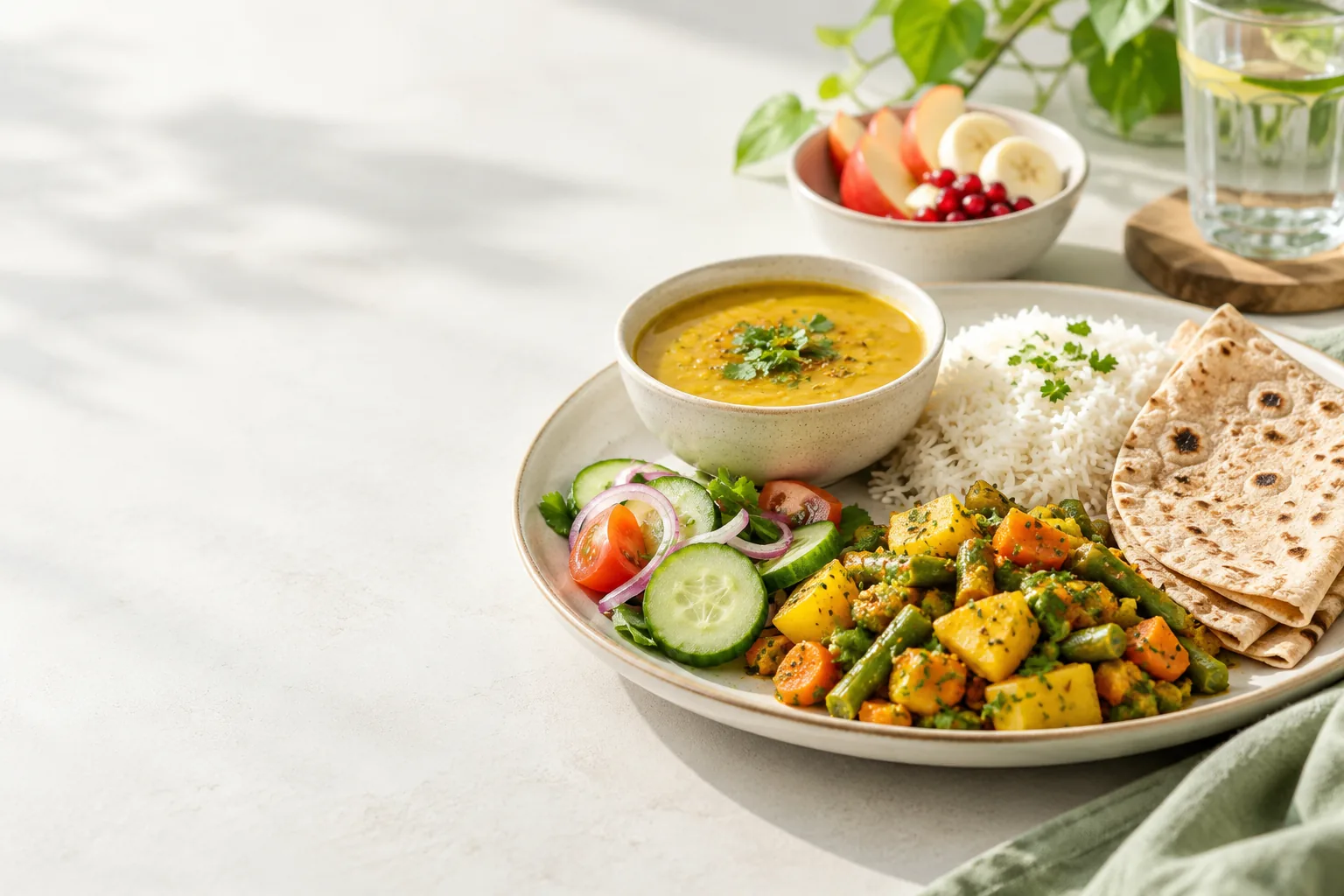
A balanced diet is built across days, not from one perfect meal. ICMR–NIN's dietary guidelines encourage variety because no single food supplies every nutrient. For an Indian meal, that can mean bringing together cereals or millets, vegetables, fruit, pulses or another protein source, and sensible amounts of fats and oils.
Start with familiar food
Think about a usual lunch of dal and roti, or rice and sabzi. You might add a vegetable you enjoy, choose a pulse, curd, egg or another suitable protein food, and include fruit elsewhere in the day. A meal can also be assembled from leftovers. The goal is variety and adequacy over time, not a rule that every ingredient must appear at every sitting.
Food traditions offer many options: idli with sambar, khichdi with vegetables and curd, or rice with rajma and a side of greens can each be adapted to different preferences. What matters is the overall pattern, how much you need, and what is available to you.
Use a plate as a guide, not a prescription
Portion needs change with age, activity, pregnancy, health conditions and other factors. A visual plate can prompt you to notice missing food groups, but it should not override individual advice. If you manage diabetes, kidney disease, food allergies or another medical condition, discuss changes with a qualified clinician or dietitian.
A small next step
Pick one meal you eat often and add one food group that is usually missing. It might be a seasonal vegetable with dinner or a piece of fruit with breakfast. Repeat what fits your routine before trying to change every meal.