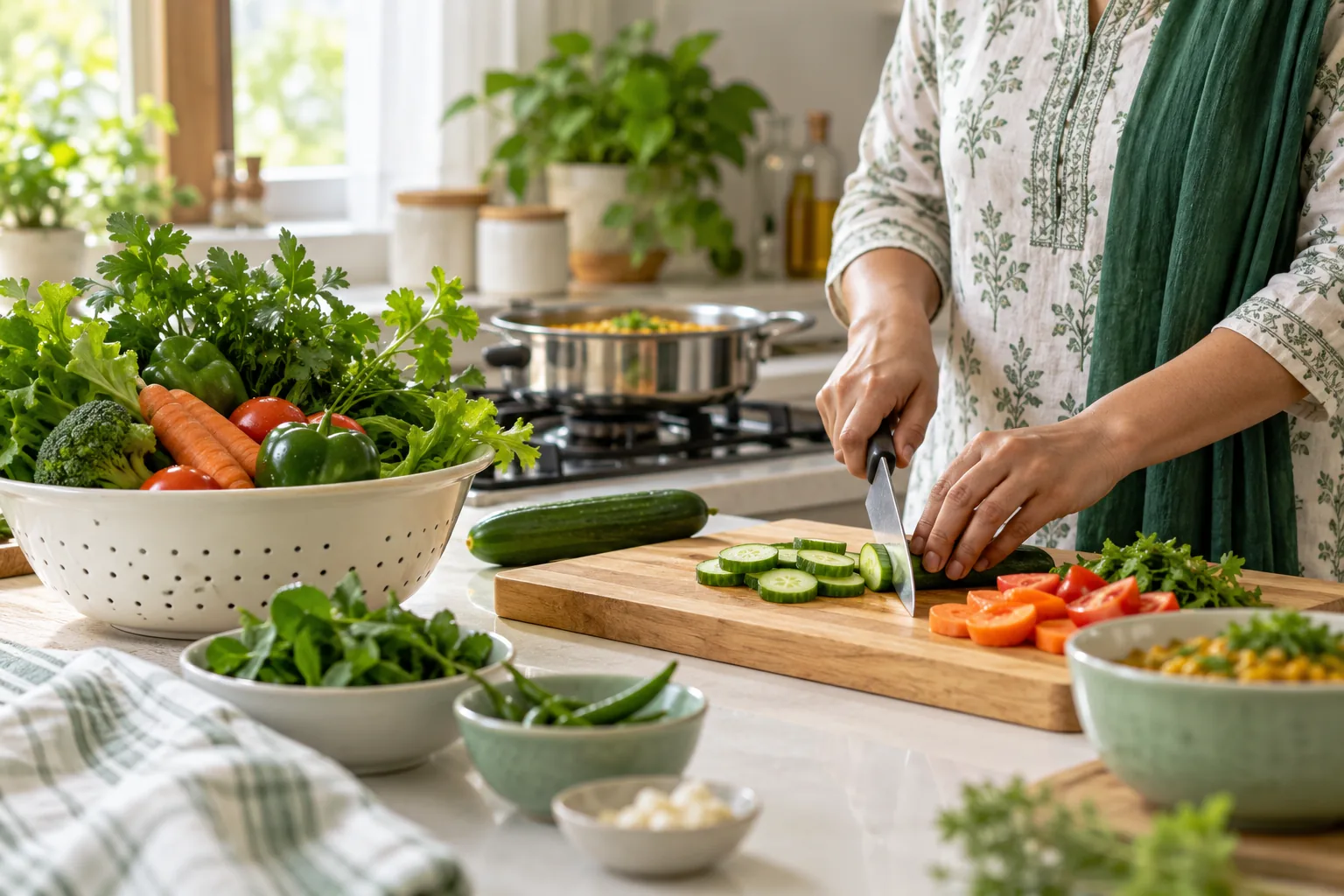
Food that supports health also needs to be handled safely. WHO organizes practical advice into five keys that work across cuisines and cooking styles: keep clean; separate raw and cooked foods; cook thoroughly; keep food at safe temperatures; and use safe water and raw materials.
Keep clean and separate
Wash hands before preparing food and after handling raw ingredients. Clean utensils and preparation surfaces. Keep raw meat, poultry and seafood, and their juices, away from foods that are ready to eat. Separate tools or careful washing can reduce cross-contact during preparation.
Cook and store carefully
Cook foods thoroughly, especially animal-source foods, and reheat leftovers thoroughly. Do not leave perishable cooked food at room temperature for long periods. Refrigerate it promptly and use suitable storage containers. The safe time and temperature depend on the food and your equipment; follow local food-safety guidance when you need specifics.
Start with safe ingredients
Use safe water for drinking, washing and cooking. Wash fruit and vegetables, particularly when they will be eaten raw. Check food condition and expiry information, and avoid using ingredients that show signs of spoilage.
These habits can be built into familiar tasks: washing greens for a salad, keeping raw ingredients away from cooked dal, or refrigerating leftovers after a meal. They are simple checks that can become part of an ordinary kitchen routine.