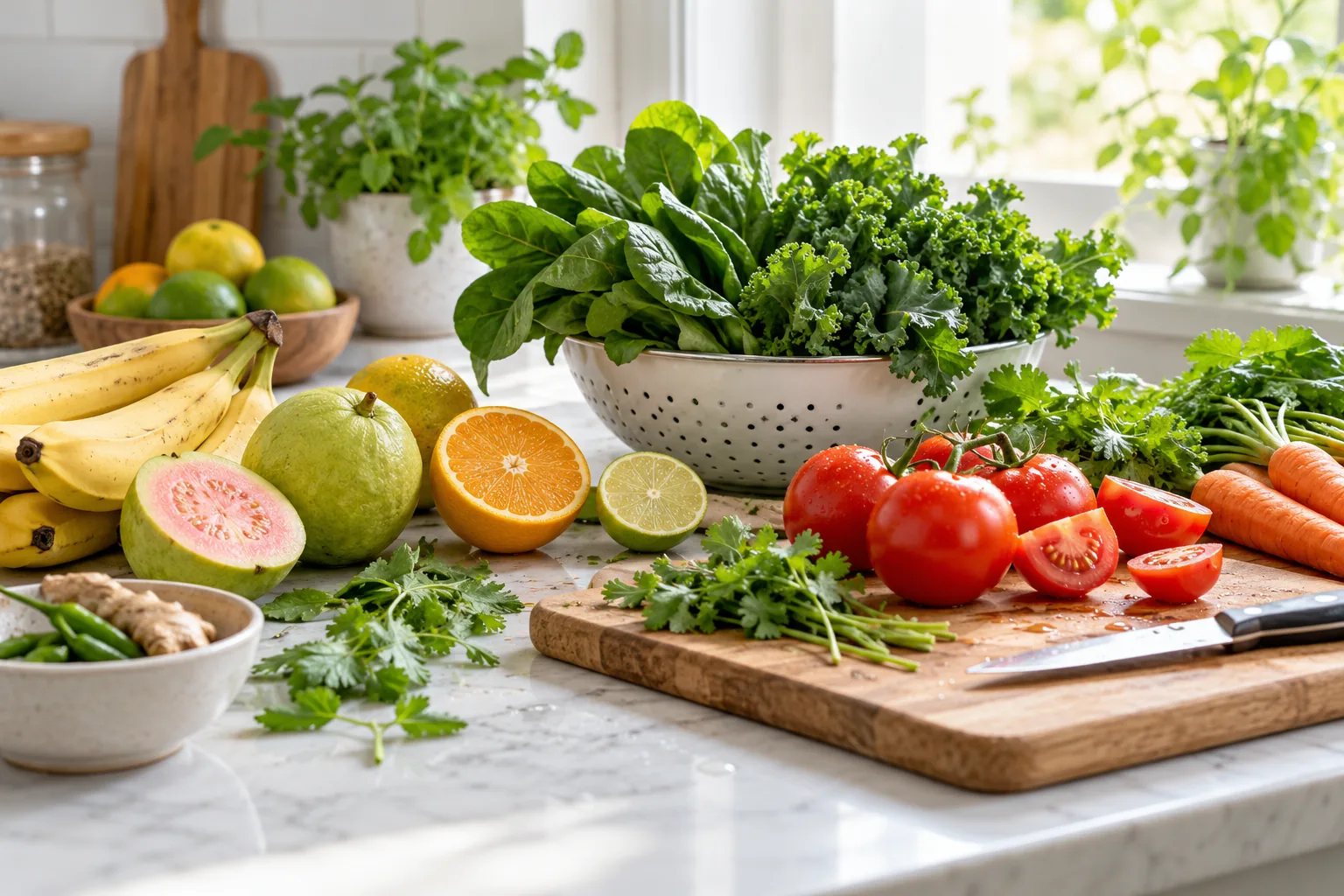
Fruit and vegetables bring different nutrients and naturally occurring fibre to meals. WHO recommends at least 400 g a day for people older than 10, while individual needs can vary. That number is a population guideline, not a demand to weigh every serving.
Spread them across meals
A banana or guava with breakfast, vegetables in a sabzi at lunch, or greens cooked into dal at dinner are all ways to make room. Choose produce you like and can get regularly. Seasonal choices may be easier to buy and keep in the routine. Fresh options are useful, and frozen or canned produce can also contribute when they do not contain added sugar or excess sodium.
Color is a convenient reminder to vary your choices, but it is not a nutrient score. You do not need five different colors on a single plate. Repeating an affordable vegetable is better than giving up because an ideal variety is unavailable.
Whole fruit and juice are different
Whole fruit retains its fibre. Fruit juice, including juice without added sugar, can contain substantial free sugars. For everyday eating, choosing whole fruit more often is a useful habit. If you drink juice, consider how it fits into the rest of your diet rather than treating it as identical to fruit.
Make the next choice easy
Wash and store fruit where it is easy to reach, or plan one vegetable for a meal you already cook. Simple preparation and availability often matter more than a new recipe. Wash produce appropriately and follow safe food-handling practices before eating it raw.