Salt and free sugars can come from foods that do not taste especially salty or sweet. WHO notes that processed foods, sauces and ready meals can add sodium, while sweet drinks, syrups and fruit juice can add free sugars. There is no need to label every packaged food as forbidden; paying attention to frequency and quantity is more useful.
Compare like with like
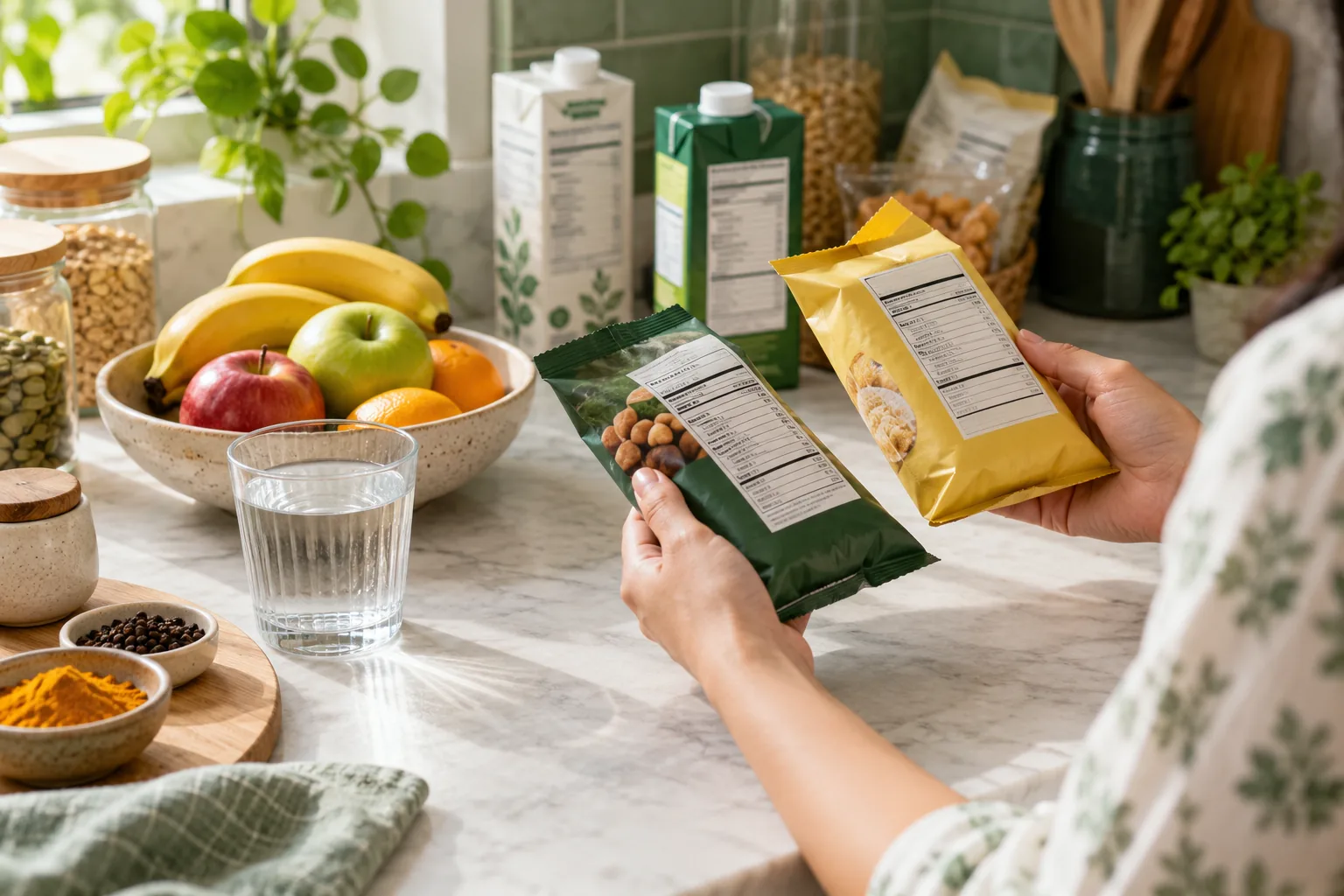
When choosing between two similar products, look at the nutrition information for the same amount, such as per 100 g or 100 ml. Check the serving size too: a small printed serving may not match what you actually eat. For salt, compare the sodium or salt figure shown on the pack. For sugar, read both the nutrition panel and ingredient list, since sugars may be added under several names.
Food labels are one tool, not a complete judgment about a food. Consider the meal as a whole, your budget and your preferences. If you are following a clinician's sodium or carbohydrate advice, use that guidance when making choices.
Small swaps that may stick
Water can be an easy default drink. You might use a little less salty sauce in one dish, choose a lower-sodium version of a food you buy often, or keep a familiar snack but have it less often. Spices, herbs, lemon and other flavors can help a meal remain enjoyable while you adjust the amount of salt added during cooking.
WHO recommends limiting free sugars and salt as part of a healthy diet. The aim here is an informed pattern of eating, not strict rules or guilt about occasional choices.